How to Jump Start a Car Safely in Kingston, TN (Step-by-Step)
A dead battery has a way of picking the worst moment. You are running late in a Kingston parking lot, or you turn the key at a trailhead near Watts Bar Lake and hear nothing but a faint click. The good news is that a jump start is one of the most fixable roadside problems there is, and with the right cables and a little care you can often be back on the road in ten minutes. This guide walks you through exactly how to jump start a car safely, in the right order, plus how to tell when a jump is not going to solve the problem and it is time to call for help.
We run Kingston Towing here in Roane County (ZIP 37763), and dead batteries are one of the most common calls we get, especially on cold mornings and after summer heat waves cook a weak battery to the end of its life. Whether you handle it yourself or call us, the goal is the same: get you moving again without damaging your vehicle or putting yourself at risk in traffic.
What You Need to Jump Start a Car
Before anything else, make sure you actually have a battery problem and not a different fault. A dead battery usually means dim or dead dashboard lights, no crank at all, or a rapid clicking sound when you turn the key. If the engine cranks strongly but will not catch, the battery is probably fine and the issue is elsewhere, so a jump will not help.
To perform a jump start you need three things:
- A set of jumper cables in good condition, or a portable jump box. Cheap, thin cables struggle with modern engines, so heavier gauge cables are worth having in the trunk.
- A donor vehicle with a healthy, fully charged battery of the same voltage (nearly all passenger cars are 12 volts).
- A safe place to work, off the travel lane, with both vehicles in park or neutral and parking brakes set.
Take a few seconds to inspect the dead battery first. If you see cracks, a swollen or bulging case, leaking fluid, or heavy white and green corrosion on the terminals, do not attempt a jump. A damaged battery can leak acid or, in rare cases, vent gas. In that situation, skip the DIY route and call a technician.
How to Jump Start a Car: Step-by-Step
Connection order matters. Hooking the cables up in the wrong sequence is how people cause sparks near the battery or send a surge through sensitive electronics. Follow these steps in order and you will be fine.
- Park the vehicles nose to nose, close enough for the cables to reach but not touching. Turn off both engines and remove the keys, or press stop on a push-button car.
- Connect one red (positive) clamp to the positive terminal of the dead battery, marked with a plus sign or POS.
- Connect the other red clamp to the positive terminal of the good battery.
- Connect one black (negative) clamp to the negative terminal of the good battery.
- Connect the last black clamp to bare metal on the dead car, such as a clean bolt or bracket on the engine block, not directly to the dead battery. This grounds the connection away from the battery and reduces spark risk.
- Start the donor vehicle and let it run for two to three minutes. This lets its charging system feed the dead battery.
- Start the dead vehicle. If it cranks and catches, leave both running for another minute, then remove the cables in the exact reverse order: black from the engine block, black from the good battery, red from the good battery, red from the revived battery.
- Keep the revived car running. Drive it or let it idle for 20 to 30 minutes so the alternator can recharge the battery.
What to Do If Your Car Still Will Not Start
If the engine does not turn over after two solid attempts, stop trying. Repeatedly cranking a car that will not start can drain the donor battery and, on some vehicles, throw electrical fault codes. A few common reasons a jump fails:
- The battery is truly dead, not just discharged. Batteries typically last three to five years, and Tennessee summer heat shortens that. A battery at the end of its life may take a jump but die again the moment you shut the engine off.
- A bad connection. Corroded terminals or loose clamps stop current from flowing. Wiggle the clamps and make sure the metal is biting into clean surface.
- The problem is not the battery. A failed starter, alternator, or ignition switch can mimic a dead battery. If your lights and radio work fine but the car will not crank, the battery is probably not the culprit.
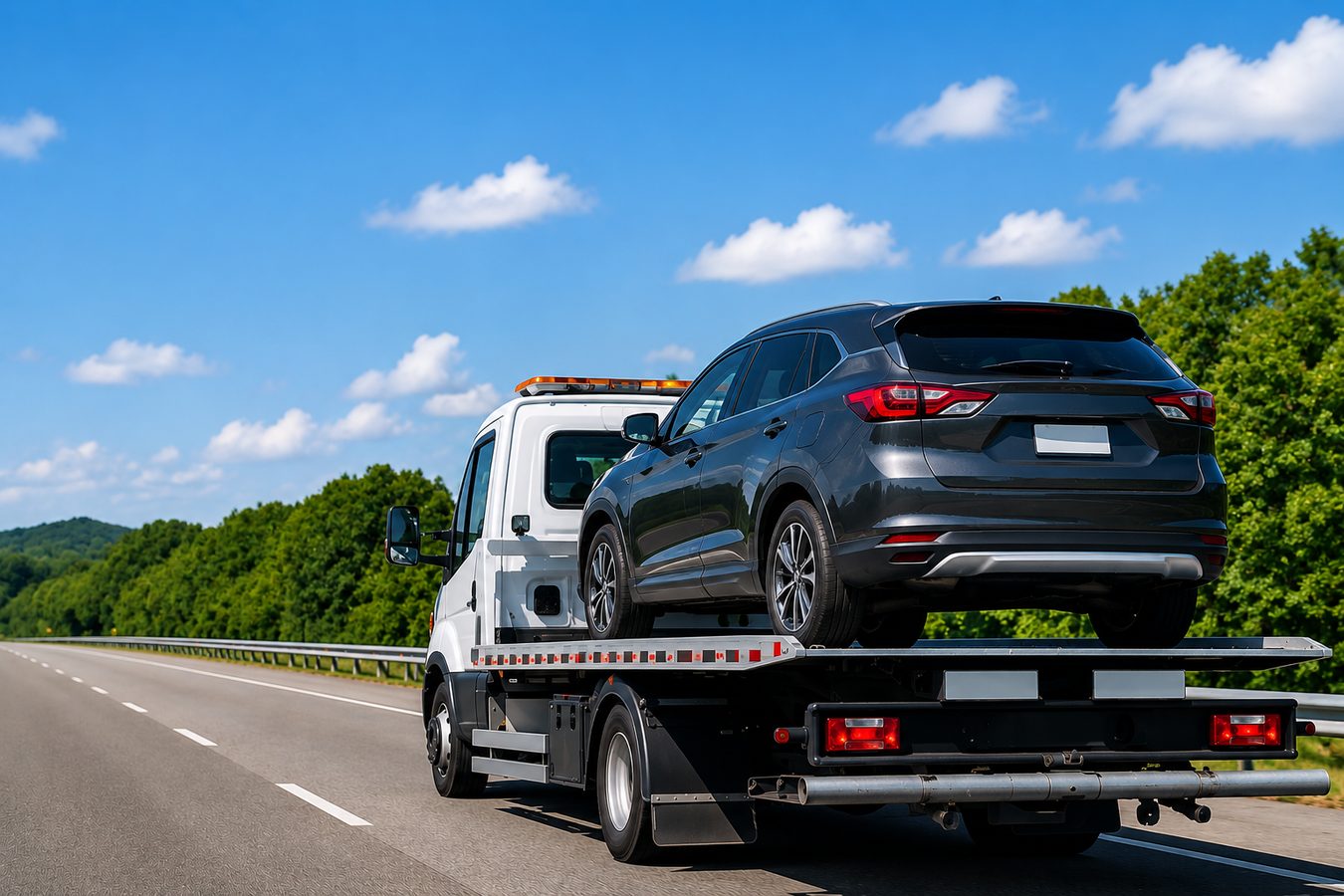
For a deeper look at the clicking-but-no-start scenario, our guide on why a car clicks and will not start breaks down what each sound means. When a jump clearly is not the answer, the safest move is a tow to a trusted shop. We use flatbed and wheel-lift equipment to move disabled vehicles without adding transmission wear, and if you have slid off the road on a wet Roane County backroad we can also handle winch-out recovery.
When to Call for Roadside Battery Help in Kingston, TN
Doing it yourself is fine in a driveway or a quiet lot. But there are times when calling a licensed and insured, DOT compliant towing company is simply the smarter, safer call:
- You are stranded on a highway shoulder or a blind curve where standing outside the car is dangerous.
- You do not have cables, or the only donor car nearby has its own weak battery.
- The battery looks damaged, is leaking, or the terminals are badly corroded.
- The car starts on a jump but dies again, which points to a failing battery or charging system.
- It is late at night, storming, or you simply do not feel comfortable working around the engine.
Kingston Towing runs 24/7 across Kingston, Harriman, Rockwood, Oliver Springs, Lenoir City, Oak Ridge, Spring City, and Crossville. We cover the I-40 corridor, US-70, TN-72, and TN-58, plus the lots and ramps around Watts Bar Lake, the Roane County Courthouse, and Roane State Community College. When you call, we bring a charged jump pack and, if the battery is done, we can tow you straight to a shop.
Staying Safe Around Traffic and the Battery
Most jump start injuries are avoidable. Keep these safety habits in mind every time. Never let the red and black clamps touch each other while any end is connected to a battery. Keep sparks, cigarettes, and flames away from the battery, which can vent flammable gas. Wear eye protection if you have it, and never lean directly over a battery while making the final connection. If you are on any road with moving traffic, get yourself and your passengers behind a barrier or well off the roadway, and switch on your hazard lights. The federal government offers a clear overview of roadside safety and vehicle equipment on the NHTSA road safety site, which is worth a read before you ever need it.
One last tip specific to our area: cold snaps in the Cumberland foothills are hard on batteries. If your car has been slow to crank all week, that is your warning. Test or replace the battery before a 15 degree morning leaves you stuck in a Kingston parking lot with a car full of groceries. A little prevention beats a jump start every time.
Dead Battery in Kingston? We Come to You, 24/7
Jump starts, roadside assistance, and fast towing across Roane County. Licensed, insured, and usually there in 30 to 45 minutes.
Call (865) 509-9219Frequently Asked Questions
How long should I let a jumped car run before turning it off?
Drive or idle for at least 20 to 30 minutes after a successful jump so the alternator can recharge the battery. In stop-and-go traffic around Kingston, aim for a longer highway drive on I-40 or US-70 if you can. If the car dies again once you shut it off, the battery is likely failing and needs replacement or a tow to a shop.
Is it safe to jump start my own car, or should I call for help?
A standard jump start is safe if you have good cables, a working donor vehicle, and no visible battery damage such as cracks, leaks, or a swollen case. If the battery is damaged, corroded, or the car still will not start after two attempts, stop and call a licensed and insured roadside technician. In Kingston and across Roane County we typically reach stranded drivers in 30 to 45 minutes, 24/7.
Has a dead battery ever caught you at the worst possible time in Kingston? Keep our number saved so the next one is a ten-minute fix, not a ruined afternoon.