How Long Does a Tow Take in Kingston, TN? What to Expect
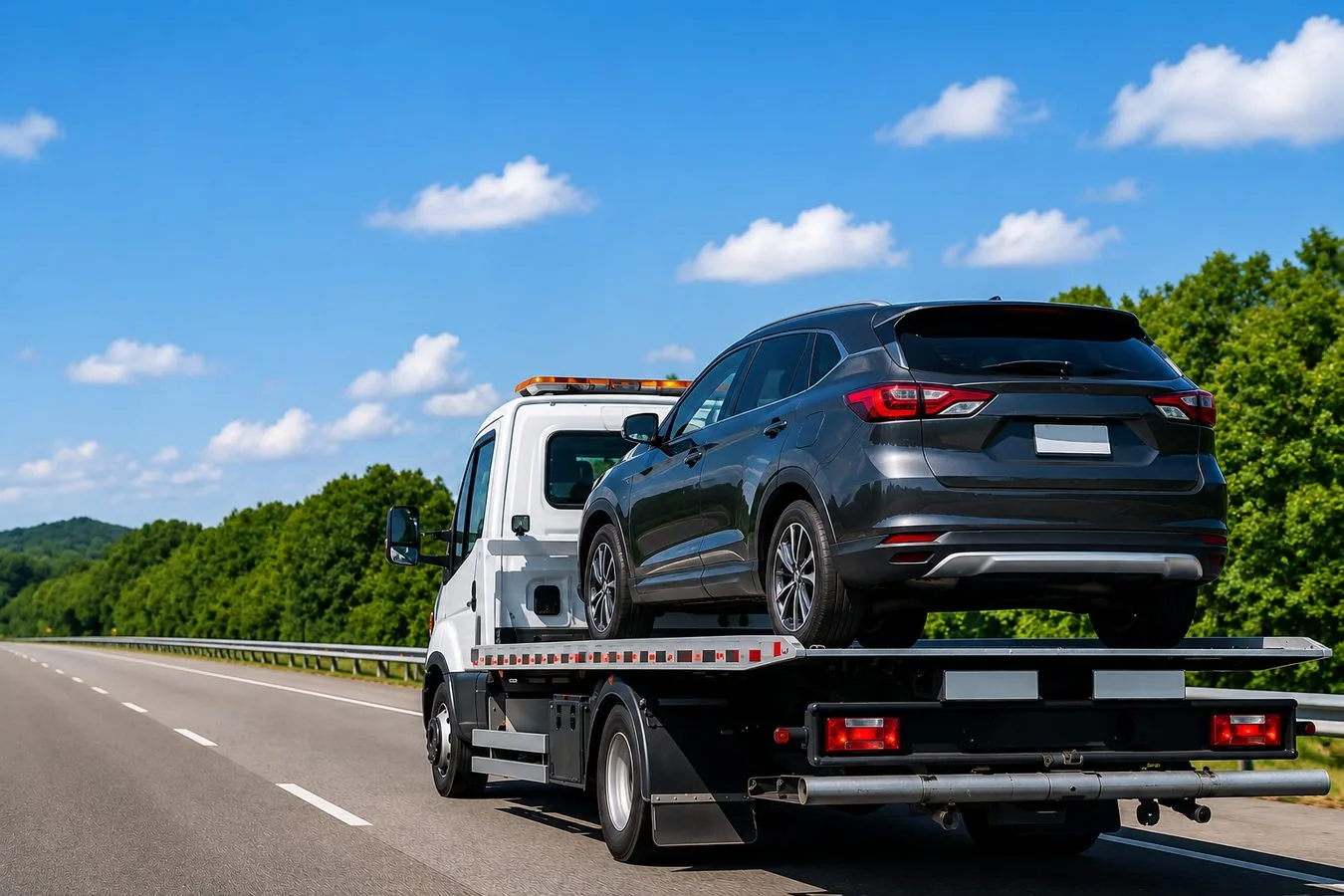
When your car quits on you, the first question is almost always the same: how long until help shows up? Standing on the shoulder of I-40 or stuck in a parking lot off US-70, every minute feels like ten. The honest answer is that most tows in Kingston, TN and the surrounding Roane County area take about 30 to 45 minutes from the time you call to the time a truck rolls up — but that number moves around depending on a handful of real-world factors. This guide walks you through what actually drives the timeline so you know what to expect and how to shave time off the wait.
We run 24/7 across the 37763 ZIP and the wider service area, so whether it is 2 in the afternoon or 2 in the morning, the same clock applies. Below we break the wait into its real pieces: dispatch, drive time, hook-up, and transport — plus the things that stretch any of them out.
Average Tow Truck Response Time in Kingston and Roane County
For a standard call inside Kingston city limits, a wheel-lift or flatbed truck typically reaches you in 30 to 45 minutes. That window covers the dispatch (a couple of minutes to confirm your location and the kind of help you need), the drive to you, and getting the truck positioned. If you are a little farther out — Harriman, Rockwood, Oliver Springs, Lenoir City, Oak Ridge, Spring City, or Crossville — add a bit of drive time, but most of those runs still land inside the hour.
A few things keep us fast in this corner of East Tennessee. We stage near the main arteries: I-40 between Exits 352 and 356, US-70, TN-72, and TN-58. Those roads connect almost everywhere people break down around here, so the truck rarely has to fight its way across town to reach you. The flip side is that a remote pickup — a gravel pull-off, a boat ramp near Watts Bar Lake, or a back road with no clear address — naturally takes longer because the driver has to find you first.
What Affects How Long Your Tow Takes
The 30-to-45-minute figure is an average, not a promise carved in stone. Here are the biggest factors that push the clock in either direction:
- Your exact location. A clearly marked spot on a main road is the fastest. A vehicle tucked behind a building, down an embankment, or on an unnamed lane takes longer to reach and to hook up.
- Time of day and traffic. Rush-hour congestion near the I-40 exits or a backup heading toward Oak Ridge can slow the drive. Late nights are often quicker simply because the roads are clear.
- Weather. Rain, ice, and fog slow every truck on the road and tend to spike call volume at the same time, so storms are the one situation where the wait reliably grows.
- The type of equipment needed. A simple wheel-lift hook-up is quick. A flatbed for an all-wheel-drive car, a winch-out for a vehicle off the road, or heavy-duty gear for a large truck all take more setup time.
- How busy the night is. On a holiday weekend or during a cold snap that kills batteries, demand climbs and the queue can stretch.
Breaking Down the Timeline: From Call to Drop-Off
It helps to picture the tow as four stages, because most of the wait lives in just one of them — the drive.
Dispatch (2–5 minutes). When you call, we confirm where you are, what is wrong, and what kind of vehicle we are sending a truck for. The more precise you can be — a mile marker, an exit number, a nearby business — the faster this goes and the more accurate your time estimate.
Drive time (15–35 minutes). This is the big variable. A breakdown a few minutes from the Roane County Courthouse is quick; a call out near Spring City or the far side of Watts Bar Lake is longer. Traffic and weather live here too.
Hook-up (10–20 minutes). A drivable car on flat pavement loads fast. A vehicle that needs a winch-out, sits at an awkward angle, or has a locked steering column or seized brakes takes more time and care. Doing it right protects your vehicle, so this is not a stage to rush.
Transport (varies). Once you are loaded, the drive to the repair shop, your home, or wherever you are headed depends entirely on the distance. A cross-town drop is minutes; a haul to a dealership in Knoxville is longer.
Our trucks are flatbed and wheel-lift equipped and our operators are licensed, insured, and DOT compliant, which matters more than most people realize: a properly secured load is both safer and, in the long run, faster than a rushed one that has to be redone. According to the National Highway Traffic Safety Administration, staying clear of moving traffic while you wait is the single most important thing you can do for your own safety during a roadside event.
How to Get Your Tow There Faster
You cannot control the weather, but you can control how quickly the right truck finds you. A few simple things make a real difference:
- Call early. The moment you know you are stranded, call. Waiting to see if the engine cools down or the tire holds just delays everything.
- Pin your location. Share an exit number, a cross street, a mile marker, or drop a map pin. Vague directions are the number one cause of a slow arrival.
- Describe the vehicle and the problem. Knowing it is an all-wheel-drive SUV that will not start versus a sedan with a flat lets us send the correct equipment the first time — no second trip.
- Make yourself visible and reachable. Hazards on, dome light on at night, and keep your phone free so the driver can call when they are close.
For a deeper look at our full lineup — flatbed towing, wheel-lift towing, lockout service, roadside assistance, fuel delivery, winch-out, motorcycle towing, and heavy-duty work — see our services page. And if you have ever wondered what a stranded driver should do in the first sixty seconds, our other Kingston guides walk through it step by step.
Need a Tow in Kingston Right Now?
We are on call 24/7 across Kingston, Harriman, Rockwood, and all of Roane County. One call gets the nearest truck moving.
Call (865) 509-9219Frequently Asked Questions
How long does a tow usually take in Kingston, TN?
For most calls inside Kingston and Roane County, a tow truck reaches you in 30 to 45 minutes, and the load-and-go usually adds another 10 to 20 minutes depending on the vehicle and where it sits. Total time from your call to being on the way to the drop-off is often under an hour.
What can make a tow take longer than expected?
Bad weather, rush-hour traffic on I-40, a vehicle stuck off the road that needs a winch-out, heavy-duty equipment for large trucks, and remote pickup spots like boat ramps near Watts Bar Lake can all add time. Calling early and sharing your exact location helps keep delays to a minimum.