Car Overheating? What to Do Step by Step in Kingston, TN
You are climbing a grade on I-40, or crawling through afternoon traffic near the Roane County Courthouse, when you notice the temperature needle creeping toward the red. Maybe there is a whiff of something hot and sweet, or a thin wisp of steam curling from under the hood. An overheating engine is one of those problems that gets expensive fast if you handle it wrong, and stays cheap if you handle it right. The difference is almost always what you do in the first two minutes.
This guide from Kingston Towing walks through exactly what to do when your car overheats, in order, plus the mistakes that turn a $150 thermostat into a blown engine. We answer overheating calls across Roane County (ZIP 37763) all summer long, because East Tennessee heat, stop-and-go traffic, and the long lake-country climbs are hard on cooling systems. Here is how to protect yourself and your engine.
The First 60 Seconds: Get Off the Heat
An overheating engine is being damaged in real time. Every extra minute the needle sits in the red raises the odds of a warped cylinder head or a blown head gasket. So the very first goal is to stop making heat.
If you are in traffic, the single most helpful thing you can do is turn off the air conditioning and turn the heater on full blast. It sounds backwards on a hot day, but the heater core pulls heat out of the engine and dumps it into the cabin. Roll the windows down and endure it. This alone can buy you the time to reach a safe place to pull over.
Then find somewhere to stop. On I-40 between Exits 352 and 356, aim for the shoulder or the next off-ramp. On US-70, TN-72, or TN-58, look for a wide shoulder, a gas station, or a parking lot well off the travel lane. Once you are safely stopped, put it in park, set the brake, and switch the engine off. Do not keep idling and hoping it settles. Shutting down stops the combustion heat and lets the cooling system catch up.
What to Do Once You Have Stopped
With the engine off and the car safely off the road, resist the urge to pop the hood and start poking around a scalding engine. A cooling system that just overheated is under serious pressure, and hot coolant can erupt without warning. Follow these steps instead.
- Turn on your hazard lights. If you are anywhere near moving traffic, make yourself visible and get out on the side away from the road.
- Pop the hood release from inside, but leave the hood latched for now. Just cracking it lets some heat escape without exposing you to steam.
- Wait. Give the engine at least 30 to 45 minutes to cool before you touch anything under the hood. This is the hardest part, but it is the safest.
- Check the coolant reservoir, not the radiator cap. Once cool, look at the translucent overflow tank. If it is empty or very low, low coolant may be your problem.
- Never open the radiator cap while hot. A hot system can blast boiling coolant several feet. Wait until the engine is cool to the touch.
If you carry coolant or water and the engine has fully cooled, topping off the reservoir may get you moving. But understand this is a gamble. If the overheating was caused by a leak, a failed water pump, or a stuck thermostat, the temperature will spike again within a mile or two. When you do not know why it overheated, the smart money is on a tow, not a hopeful drive.
Why Cars Overheat Around Kingston
Understanding the common causes helps you judge whether you are looking at a quick fix or a tow-worthy failure. Cooling systems are simple in concept but have several parts that can each bring the whole thing down.
- Low or leaking coolant. The most common cause. A leaking hose, radiator, or water pump gasket slowly bleeds coolant until the system cannot regulate heat.
- A stuck thermostat. If the thermostat fails closed, coolant cannot circulate to the radiator, and the engine cooks even though the system is full.
- A failed water pump. The pump moves coolant through the engine. When it fails, circulation stops and temperatures climb fast, often with a whine or a wobble.
- A bad radiator fan. In slow traffic there is no airflow through the radiator without the fan. A dead fan shows up as overheating at idle that eases on the highway.
- Summer load and terrain. Tennessee heat, a loaded car, trailer towing, and long climbs in the Cumberland foothills all stack heat onto the system. A marginal cooling system fails first on a hot climb near Watts Bar Lake.
Fog and morning humidity can also mask early steam, so trust the gauge and any warning light over what you can see. If the light is on, treat it as real.
The Mistakes That Wreck Engines
Most of the truly expensive overheating repairs we see trace back to one of a few avoidable errors. Knowing them ahead of time is worth real money.
Driving on a red gauge. Pushing "just to the next exit" with the needle pegged is how a repairable issue becomes a blown head gasket or a cracked block, which can run into the thousands. If the gauge is in the red or you see steam, the car needs to stop and get towed, not driven.
Opening a hot radiator cap. This is the number one cause of overheating-related burns. The system is pressurized and the coolant is well above boiling. Always wait for a full cool-down.
Pouring cold water into a hot engine. Dumping cold water into a scorching engine block can crack it from thermal shock. Let it cool, and add coolant gradually.
Ignoring the first warning. A car that runs a little hot in traffic and then "seems fine" is telling you something. The federal government's safety resources at NHTSA.gov stress that addressing small vehicle issues early prevents dangerous roadside breakdowns. If you have seen the needle climb once, get the cooling system checked before it strands you.
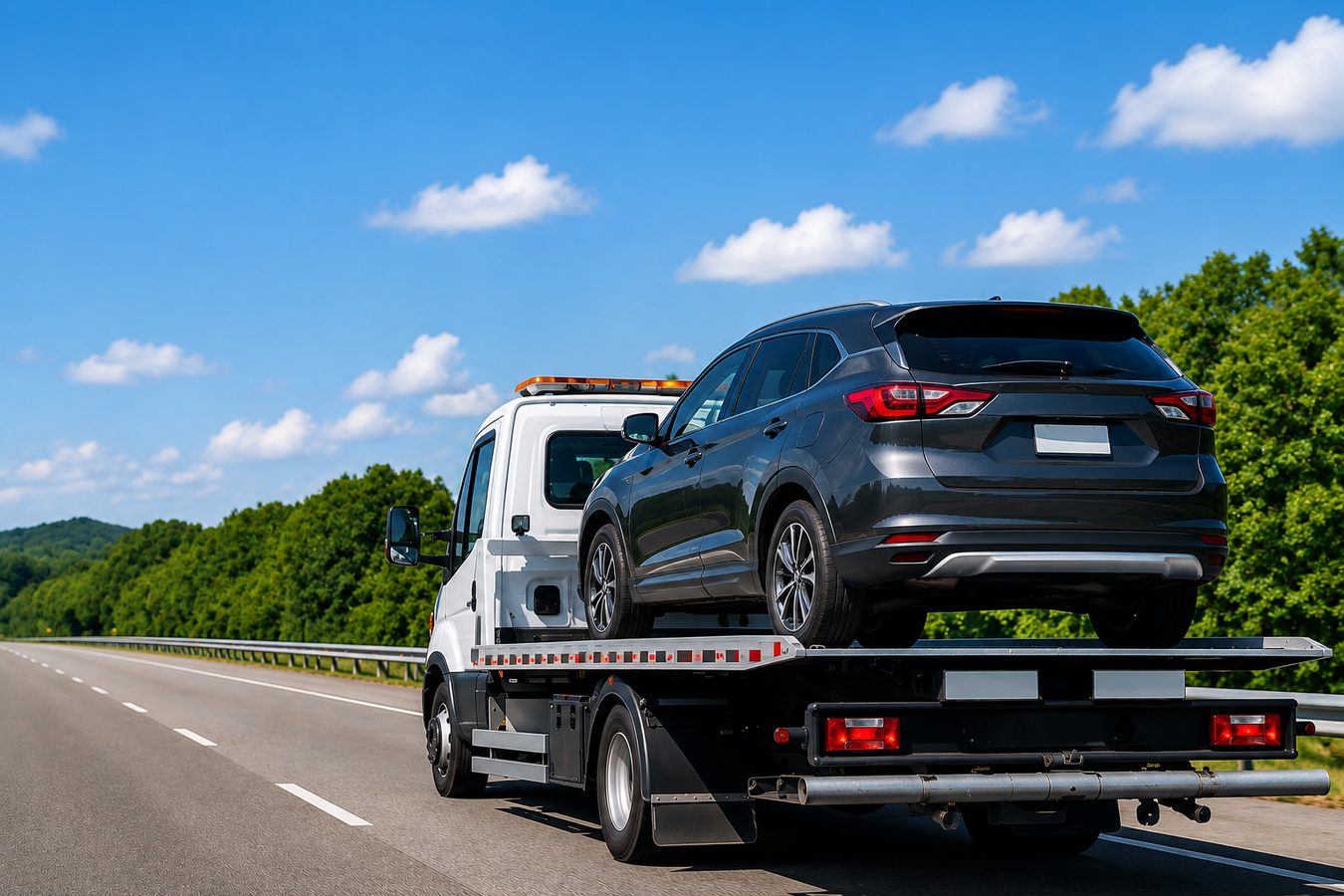
When the safe answer is a tow, that is exactly what we are built for. We use flatbed and wheel-lift equipment to move an overheated car without running the engine another foot, and if you have pulled off onto soft ground or a ditch on a rural Roane County road, we can handle winch-out recovery too. For a broader look at handling a sudden failure on the road, our guide on what to do when your car breaks down on US-70 pairs well with this one.
When to Call for Emergency Towing in Kingston, TN
Some overheating situations are DIY-friendly once things cool down. Others are a clear call for a licensed and insured, DOT compliant tow. Reach for the phone when any of these are true.
- The gauge is in the red, a warning light is on, or steam is pouring from under the hood.
- You have topped off coolant and it overheats again within a couple of miles.
- You see a puddle of coolant under the car or hear a whine from the water pump.
- You are stranded on an I-40 shoulder, a blind curve, or anywhere it is unsafe to stand outside.
- It is dark, storming, or foggy, or you simply are not sure what is wrong.
Kingston Towing runs 24/7 across Kingston, Harriman, Rockwood, Oliver Springs, Lenoir City, Oak Ridge, Spring City, and Crossville. We cover the I-40 corridor between Exits 352 and 356, US-70, TN-72, and TN-58, plus the ramps and lots near Watts Bar Lake, the Roane County Courthouse, and Roane State Community College. When you call, we bring the right truck to move your car to your shop or home without adding a single hot mile to the engine. If you want to understand response times before you ever need us, our post on emergency towing in Kingston lays it out.
Overheating in Roane County? We Roll 24/7
Emergency flatbed and wheel-lift towing across Kingston and the I-40 corridor. Licensed, insured, and usually there in 30 to 45 minutes.
Call (865) 509-9219Frequently Asked Questions
Is it ever safe to open the radiator cap on an overheating car?
No, not while the engine is hot. A hot cooling system is under high pressure, and removing the cap can blast scalding coolant and steam into your face, causing serious burns. Wait until the engine has fully cooled, at least 30 to 45 minutes, before touching the cap. If you cannot wait that long or you are stranded on a hot Roane County roadside, the safer move is to shut the car off and call for a flatbed tow instead of risking injury.
Can I just add water and keep driving to my shop in Kingston?
Sometimes topping off with water gets you a few miles once the engine has cooled, but it is a gamble. If the overheating came from a leak, a failed water pump, or a bad thermostat, the temperature will spike again quickly and you can destroy the engine. On short, cool-weather trips it may hold, but in Tennessee summer heat or on a climb it often will not. When the cause is unknown, a tow to a trusted shop is the cheaper choice in the long run.
Has a hot gauge ever caught you off guard on an East Tennessee summer drive? Keep our number handy so the next time, cooling down is the only thing that overheats.